Focused arrival windows
Useful updates and clear arrival timing.
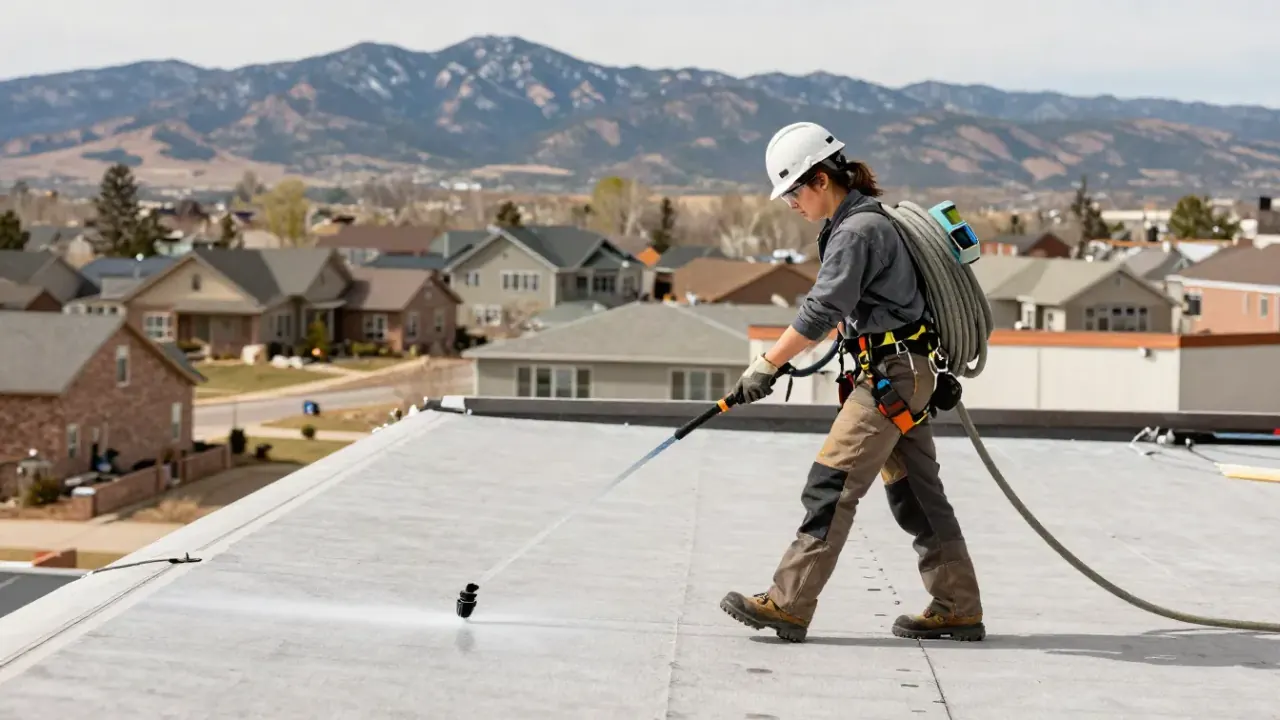
Flat and low-slope roofs hold water, so any weak seam, blister or penetration becomes a leak. We locate the failure and patch it with materials that suit your roof membrane.
Useful updates and clear arrival timing.
Review the approach and price before deciding.
Equipped vehicles and respectful cleanup.
Neighbors serving neighbors with follow-through.
Every visit starts with a clear look at what is happening and ends with a walkthrough of what was done.
We look over the membrane surface, seams, edges and flashings for splits and open joints.
Ponding water is a leading cause of failure. We check slopes, drains and scuppers.
A controlled water test can confirm where a hard-to-find leak enters.
We prepare the area and patch with materials compatible with your existing membrane.
Share what is happening and receive a clear next step from the local team.
A low-slope roof relies on a continuous membrane, and the weak points are seams, flashings, drains and penetrations. Water that cannot drain quickly sits on those points and finds any opening.
A patch can be the right fix for a localized failure. When the membrane is worn across the whole roof, we will say so and discuss coatings or replacement instead.
We walk the roof, document its condition and note ponding and damage.
Where needed we use a controlled water test to confirm the source.
The area is cleaned and dried so the patch bonds.
We apply a patch compatible with your membrane and detail the surrounding edges.
We review the repair and note areas to monitor, such as ponding.
Standing water points to drainage trouble and a likely leak source.
These are early signs the membrane is failing in that spot.
Interior stains under a low-slope roof often trace to a seam or penetration.
Flat roofs get more demanding duty than they appear to from the street.
Snow that melts and refreezes can back water up at drains and edges.
Hail can bruise and puncture membranes, especially older ones.
Strong sun and daily temperature changes age membranes faster.
These are the flat roof leaks we are called about most often.
Standing water speeds up wear and finds any weak point in the membrane.
Separated seams leave a direct path for water into the roof system.
Vents, pipes and curbs are common sources on low-slope roofs.
Patch cost depends on the membrane type, how many areas need work and how hard the leak is to locate. You get a written scope and price before work begins.
Modified bitumen, TPO, EPDM and built-up roofs each need different repair materials.
A single patch costs less than multiple seams and penetrations.
Hard-to-find leaks may need water testing, which adds time.
A localized failure can usually be patched. If the membrane is worn across the roof, a coating or replacement may be the better value. We will give you an honest recommendation.
Common causes are open seams, failed flashing, blocked drains and ponding. We locate the specific source before patching.
That depends on your membrane, such as modified bitumen, TPO, EPDM or built-up roofing. We match the repair material to what you have.
We serve Littleton and nearby areas including Downtown Littleton, Bow Mar and Chatfield. Call to confirm coverage for your address.
Not seeing your question? Our local team can help you understand urgency, scheduling and what to expect.
Ask the local team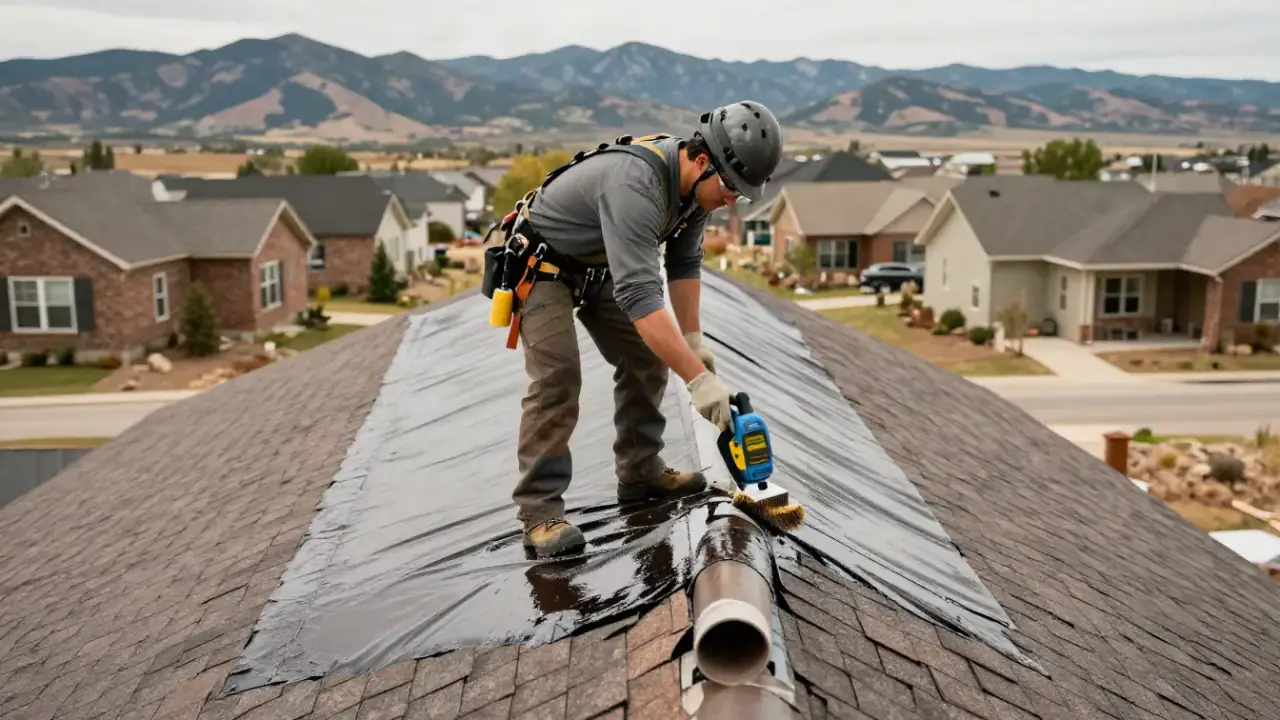
Adds a protective waterproof layer that helps your roof shed water and resist leaks.
View service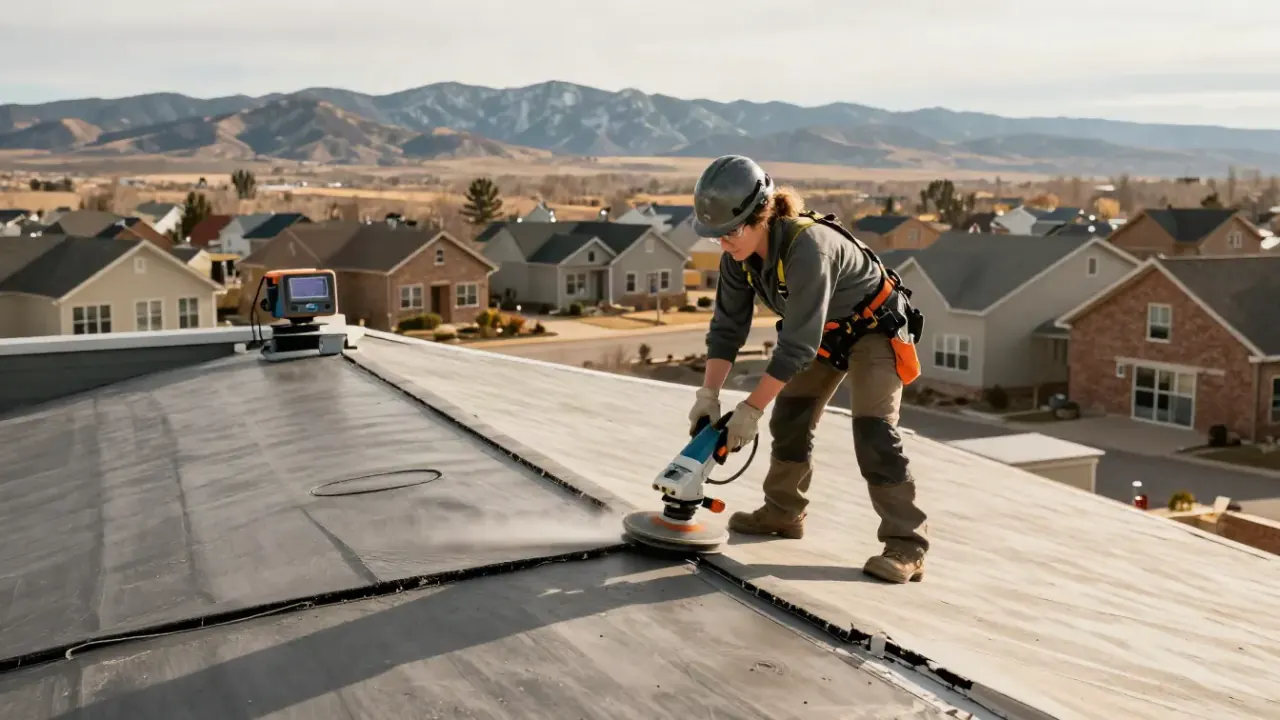
Seals cracks in terraces and decks so water cannot seep through into the home.
View service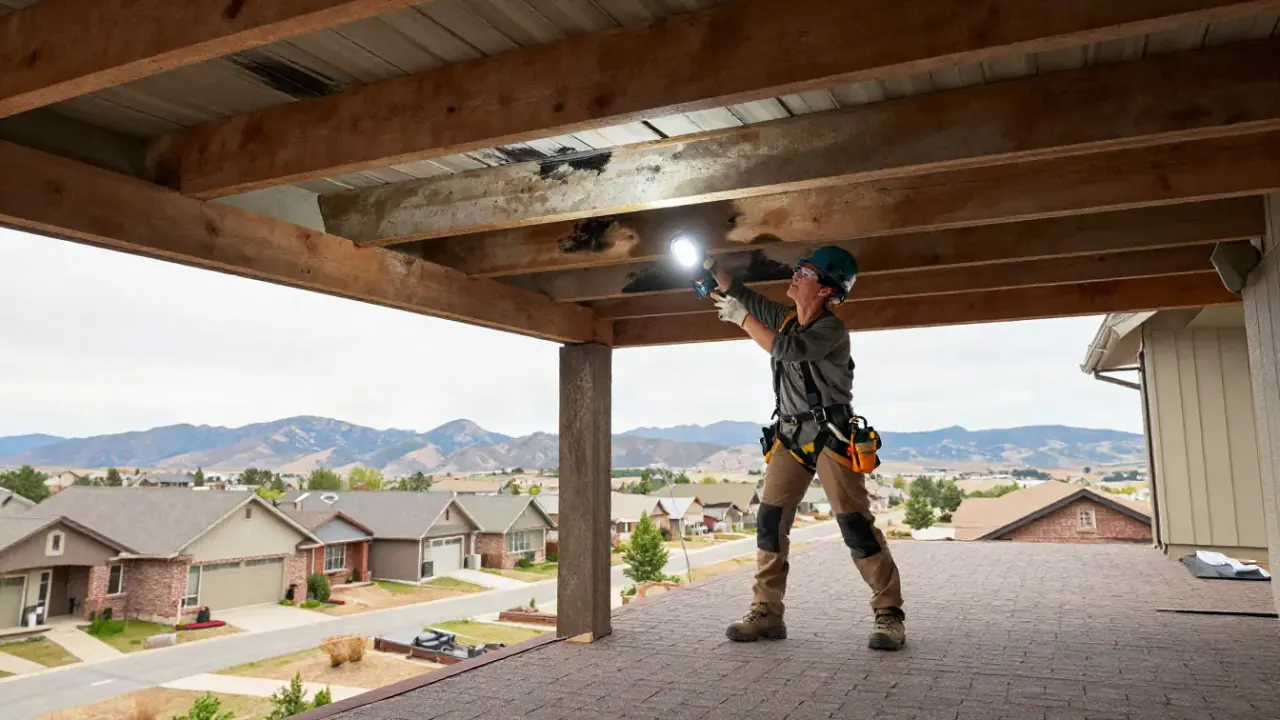
Finds hidden leaks before they cause damage, using moisture readings, thermal imaging and a careful inspection.
View service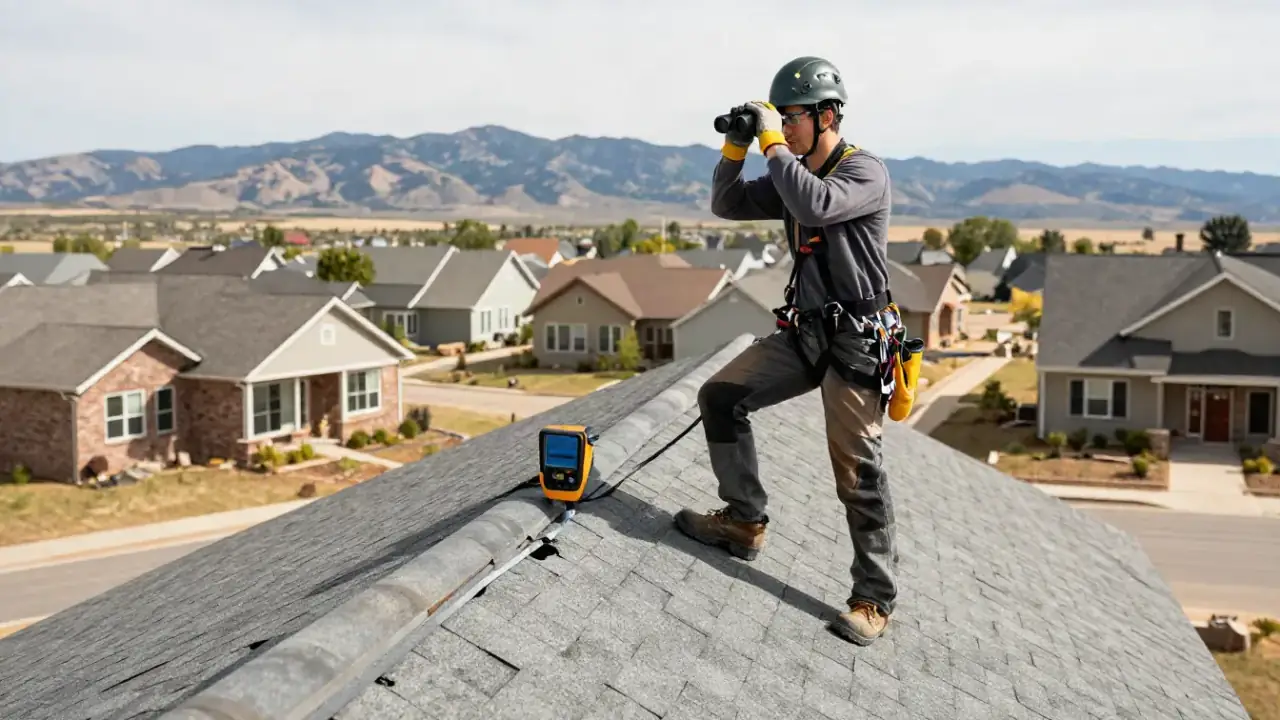
Temporary tarping that keeps rain and snow out after storm damage until permanent repairs are made.
View serviceWe invite you to reach out for any roof leak repair needs. Our team is available to assist you and typically responds within 24 hours.
Flat and low-slope roofs should be checked at seams, drains, penetrations, transitions, and areas where water may collect. A patch must be compatible with the existing membrane and applied to a properly prepared surface. If the underlying material is wet or failing, a small patch may not be sufficient.
Related service: roof leak detection. We serve Littleton and nearby communities; see our service areas for the current coverage list.